
Leadership Transition: The Human Side of Moving into Senior Leadership
Leadership transitions are often celebrated as career milestones: visible proof that hard work, competence, and dedication have been recognised. A promotion to a senior role carries a certain prestige, the kind that peers acknowledge and organisations reward. From the outside, it looks like the natural next step for a high performer finally arriving where they belong.
Yet the reality, for many leaders, is far more complex.
Leadership transition research consistently shows that moving into a more senior role is one of the most disorienting and demanding periods in a professional’s career — not because the person is incompetent, but because the nature of leadership itself fundamentally changes. The skills, habits, and instincts that earned the promotion can become the very things that make the transition harder.
Stepping into expanded responsibility requires much more than acquiring new capabilities. It requires adapting to a profoundly different way of thinking, influencing, deciding, and creating value. It requires, in many cases, letting go of a professional identity that has been carefully built over years.
In other words, leadership transitions are not only organisational events. They are deeply human ones.
What Is a Leadership Transition?
A leadership transition occurs when a leader steps into a role with greater responsibility, broader scope, and more complex stakeholder relationships. The structural change is usually easy to define: a larger team, a bigger budget, a more visible mandate.
But the experience of transition runs far deeper than any organisational chart can capture.
Common examples include:
- Moving from functional leadership to enterprise-wide or institutional responsibility
- Shifting from peer to manager
- Leading larger teams
- Leading an organisation through significant transformation, or
- Stepping into a role that carries institutional or public accountability.
What makes these moments particularly difficult is that they represent what author Michael Watkins, in The First 90 Days, describes as predictable periods of vulnerability. Leaders enter unfamiliar terrain — new expectations, new relationships, new standards of success — whilst still being held accountable for performance. The learning curve is real, and the margin for prolonged adjustment is often narrow.
This is perhaps the most underappreciated truth about leadership transitions: success in a previous role does not automatically translate into success in the next one. The demands have changed. The very nature of the contribution expected has shifted. And many leaders, entirely understandably, do not yet know what the new version of excellence looks like for them.
Why High Performers Often Struggle After Promotion
There is a painful irony at the heart of many leadership transitions.
High performers are typically promoted because they deliver results, solve complex problems with confidence, and are trusted experts in their field. These qualities are real, earned, and genuinely valuable. But senior leadership operates on a different logic.
At higher levels of responsibility, the expectation shifts from doing to enabling. Leaders are no longer measured primarily by the quality of their individual contribution. They are measured by the quality of the environment they create, by how effectively they direct, align, inspire, and develop others.
This shift is not a simple adjustment. For many leaders, it requires a near-complete reorientation of how they understand their role.
Marshall Goldsmith captured this tension with characteristic directness in What Got You Here Won’t Get You There. The behaviours and mindsets that drive success at one level — decisiveness, technical authority, hands-on problem-solving — can become genuine liabilities when leadership responsibilities expand. Not because those qualities are wrong, but because they are being applied in a context that has outgrown them.
The Centre for Creative Leadership echoes this finding: adapting to new roles and new expectations is consistently one of the most significant challenges leaders face during career transitions — more challenging, in many cases, than the technical complexity of the role itself.
What makes this so difficult to navigate is that the old behaviours feel comfortable and familiar. Under pressure or uncertainty, they are the instinctive response. And so leaders can find themselves reverting to doing when they should be directing, solving when they should be listening, and controlling when they should be trusting.
Leadership transitions are rarely about learning something entirely new. They are more often about unlearning, rebalancing, and accepting that the old definition of personal excellence no longer fully applies.
The Emotional Reality of Senior Leadership
Leadership transitions are typically discussed in structural terms. A larger team. Greater responsibility. A broader mandate. Organisations announce them with confidence, establish performance expectations, and largely move on.
But internally, many leaders are navigating something quite different.
Behind the composed exterior that senior roles appear to require, many newly promoted leaders experience significant self-doubt — not the existential kind, but the persistent kind that asks:
“Am I genuinely ready for this? What happens when I get it wrong? Will others see through me?
Psychologists Pauline Clance and Suzanne Imes, in their foundational research on what they termed impostor phenomenon, found that feelings of inadequacy can persist even amongst highly accomplished professionals. Leadership transitions create fertile ground for these feelings precisely because they strip away the familiar benchmarks against which people have long measured themselves.
Add to that the pressure to prove oneself in a new context, the fear of visible failure, the uncertainty about what success genuinely looks like, and the heightened scrutiny that accompanies seniority — and the emotional weight of transition becomes considerable.
What makes this particularly isolating is that the higher a leader rises, the less permission they feel to express any of it. Senior leadership carries an implicit expectation of certainty and composure. Admitting doubt can feel risky. Asking for help can feel like confirming the very inadequacy one is trying to conceal.
The emotional dimension of leadership transition remains largely invisible within organisations. Yet its influence on leadership behaviour, on the quality of decisions made and relationships built.
The Invisible Pressure of Visibility
One of the least discussed aspects of senior leadership transition is what it feels like to be genuinely, consistently visible.
As responsibility increases, so does scrutiny. Decisions are observed and analysed. Communication is examined for tone and signal. Mistakes carry consequences that ripple further and faster than before. Leadership behaviour becomes a reference point for others, whether intended or not.
This is a profoundly different experience from operating within a team or a function, and it generates its own set of psychological pressures.
Some leaders respond by becoming more cautious: hesitating before acting, seeking more certainty than any situation can offer. Others become more controlling. Some overprepare. Others withdraw. These responses are natural, often unconscious reactions to the experience of being observed and judged under high-stakes conditions.
Ronald Heifetz, in Leadership Without Easy Answers, argues that effective senior leadership requires the capacity to remain present and steady under conditions of sustained pressure, uncertainty, and competing demands. What he describes as “getting on the balcony” — maintaining perspective whilst remaining fully engaged — is a skill that sounds straightforward and proves genuinely difficult.
Leadership Transition Is Also an Identity Shift
Perhaps the most underexplored dimension of any leadership transition is what happens internally to the person holding it.
Developmental psychologists Robert Kegan and Lisa Lahey, whose research on adult development has significantly shaped our understanding of leadership growth, argue that genuine transformation requires more than acquiring new competencies. It requires a shift in how people make meaning of their experience, how they understand themselves, their authority, and their relationship to those around them.
This has profound implications for leaders in transition.
When the scope of responsibility expands, leaders inevitably encounter questions they may not have faced before:
- Where does my value come from now, if not from my expertise?
- How do I lead with authority when I no longer have all the answers?
- How do I build trust through influence rather than through direct control?
- How do I make sound decisions under conditions of genuine ambiguity?
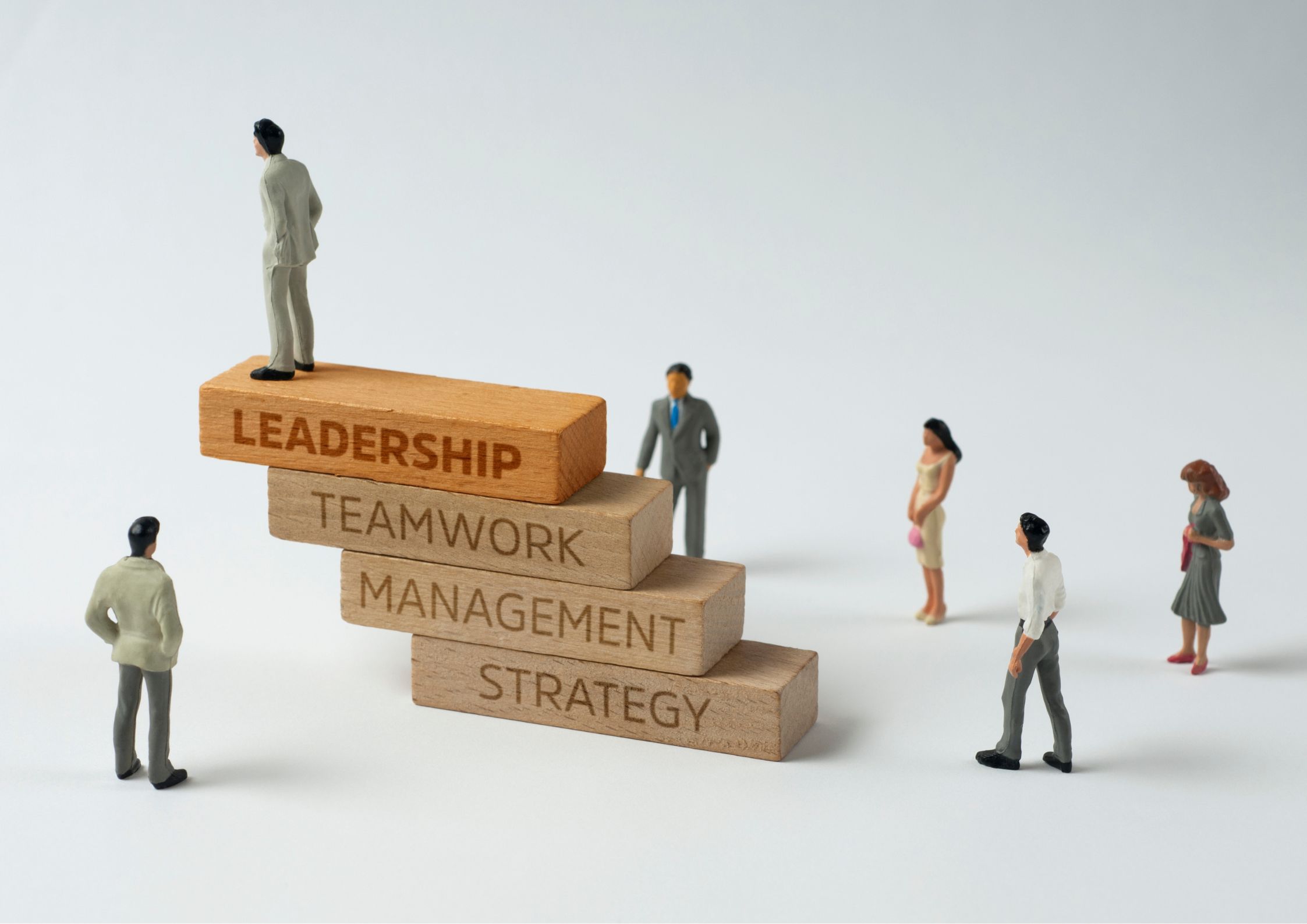
These are not operational questions. They are identity questions. And they sit beneath the surface of every meeting attended, every decision made, and every conversation navigated during the transition period.
Until this internal shift is integrated, until the leader has genuinely updated their sense of who they are and how they contribute — new leadership behaviours will not be natural.
A leader may use the language of empowerment whilst still feeling the urge to step in and fix things themselves. They may genuinely want to delegate, yet struggle to let go. They may say the right things in the room, but act differently under pressure. This gap is what happens when the outer role has changed but the inner sense of self has not yet followed.
And this is precisely why the identity shift at the heart of leadership transition cannot be left to chance. It needs to be named. It needs to be explored. And in most cases, it needs to be accompanied — by a coach, a mentor, or a trusted thinking partner who can help the leader navigate not just the practicalities of the new role, but the deeper personal evolution it requires.
Without that support, many leaders quietly manage the discomfort rather than working through it. They adapt on the surface whilst remaining anchored to an older version of themselves. And the transition, however outwardly successful it appears, remains incomplete.
Leadership Transition Is Ultimately a Human Transition
Organisations tend to evaluate leadership transitions through the lens of performance — and rightly so. Results matter. Effectiveness matters. The ability to deliver in a new role, under new conditions, is a legitimate and important measure of success.
But sustainable senior leadership rarely emerges from performance management alone.
It emerges from adaptation — from the willingness to think differently, relate differently, and influence differently.
The leaders who navigate transitions most successfully are not always those with the greatest technical expertise. They are, more often, those willing to remain curious about what the new role genuinely requires and honest about the distance between where they are and where they need to be. They ask better questions. They seek feedback without treating it as a verdict. They create space for others to lead, even when stepping back feels counterintuitive. And they find ways to remain grounded in who they are while allowing who they are to evolve.
Leadership transition, at its core, is not simply about what leaders do differently. It is about who they become in the process.
And that is a journey worth taking seriously not merely as a professional challenge, but as a profoundly human one.
How Organisations Can Better Support Leadership Transitions
Despite the frequency of leadership transitions, many organisations remain poorly equipped to support them.
Onboarding processes, where they exist, tend to focus on operational orientation — systems, structures, key stakeholders. What they rarely address is the psychological and relational complexity of stepping into a more senior role.
Research consistently suggests that the most effective support during leadership transitions combines three elements:
Structured reflection. Transitions accelerate growth when leaders have space to make sense of their experience — what is shifting, what is being asked of them, and what they may need to release. Coaching, mentoring, and peer learning groups all serve this function.
Honest feedback. In more senior roles, candid feedback becomes harder to obtain and more important to seek. Leaders who actively cultivate trusted sources of honest perspective adapt more effectively than those who rely on their own judgement alone.
Psychological safety at the top. Cultures that treat the emotional reality of transition as legitimate — rather than as weakness to be managed privately — create conditions in which leaders can develop more honestly and sustainably.
Supporting leadership transitions well is not simply a matter of individual wellbeing. It is an organisational capability with direct implications for performance, retention, and culture.
References
Clance, P. R., & Imes, S. A. (1978). The Impostor Phenomenon in High Achieving Women: Dynamics and Therapeutic Intervention.
Goldsmith, M. (2007). What Got You Here Won’t Get You There.
Heifetz, R. (1994). Leadership Without Easy Answers.
Kegan, R., & Lahey, L. (2009). Immunity to Change.
Watkins, M. (2013). The First 90 Days.
Center for Creative Leadership (CCL). Research on leadership transitions and leader development.